![src=http://www.metanexus.net/magazine/portals/0/VisualExplorations/0707_Tao.jpg]()
©2007 Andrew Ilachinski
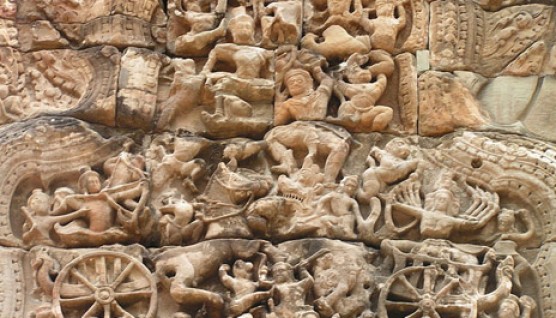
My imaging philosophy is very simple. I strive to record the subtle, interconnected web of energy that makes up what we call the world. For me, beauty, which permeates everything around us, appears in its most sublime state when form, color, pattern and texture are all in harmony.
In the same way as all “objects” in this world are fundamentally impermanent, and essentially arbitrary, partitions of an otherwise continuous, unfragmented whole, I view photography as an almost mystical process whereby this illusion of fragmentation is momentarily lifted and the underlying essence of the universe revealed. To “see” the whole, one must first learn see “parts” as mere illusions.
I take pictures of what calms my soul. There may be other, more descriptive or poetic words that may be used to define the “pattern” that connects my images, but the simplest meta-pattern is this: I take snapshots of moments in time and space in which a peace washes gently over me, and during which I sense a deep interconnectedness between my soul and the world. Not Henri Cartier-Bresson’s “Decisive Moment,” but rather a Sudden Stillness. The best moments of all are those in which my focus on nature’s local harmonies runs so deep that distinctions between time and space, between object and ground, and between form and substance, are all blurred and—for a brief instant—disappear altogether. As the boundary between my inner world—my ego—and the outer reality (or what my ego fools itself into believing is an outer reality) temporarily vanishes, I sometimes manage to catch a wispy imprint of that mysterious boundary with my camera. The result is what I call a photograph.
For further information and to see more of Ilachinski ‘s work, go to, www.ilachinski.com
-
Since receiving his doctorate in theoretical physics from the State University at Stony Brook, NY in 1988 (for which he explored the consequences of dynamically coupling cellular automata to their underlying lattice, among other complexity-related topics), Dr. Ilachinski has been a research analyst and project director at the Center for Naval Analyses ( CNA ) in Alexandria, VA. There, he has focused mostly on mathematical and computer simulation studies. His projects have ranged from applying simulated annealing to surface surveillance problems, to radar modeling, to applying neural nets to electronic intelligence management and ambiguity resolution problems.
Dr. Ilachinski was CNA's field representative to the Tactical Electronic Warfare Wing at Whidbey Island, Washington, where he provided technical support for the Navy's EA-6B electronic jammer aircraft. He has observed and reconstructed Navy exercises and has co-authored the Electronic Warfare volume of CNA's Operation Desert Storm reconstruction report.
Recently, in studies sponsored by the US Marine Corps and the Office of Naval Research , Dr. Ilachinski has been exploring the applicability of complex adaptive systems theory and nonlinear dynamics to the understanding of land warfare. As part of that research he is currently developing a sophisticated PC-based, multiagent-based "artificial-life" modeling toolkit (called EINSTein ) to help explore self-organized emergent behavior in combat. He has lectured extensively during the past five years to widely diverse civilian (including a very receptive audience at the Smithsonian ) and military audiences about how complexity might fundamentally alter the way in which we understand warfare.
Most recently, Dr. Ilachinski appeared in the February 2006 issue of B&W magazine in a Spotlight on pages 98-101. Find more information on B&W magazine at http://www.bandwmag.com.
Dr. Ilachinski has written two graduate-level mathematical physics texts: (1) Cellular Automata: A Discrete Universe , and (2) Artificial War: Multiagent-Based Simulation of Combat . Both are published by World Scientific .
When not making his bad eyes even worse by sitting in front of a computer and playing with his artificial life forms, Andy is almost always enjoying his family and prowling around the neighborhood with his Nikon Coolpix 950 , Olympus E10 , Canon D60 & 1D Mark II and assortment of batteries, tripods, lenses, filters and compact flash cards. Though Andy never foresaw the day his beloved film-based Canon A2E would spend more time in the camera bag than out, the appearance of the remarkably capable D60 and 1D Mark II digital cameras has rendered all such musings moot once and for all!
For further information and to see more of Ilachinski 's work, go to, www.ilachinski.com