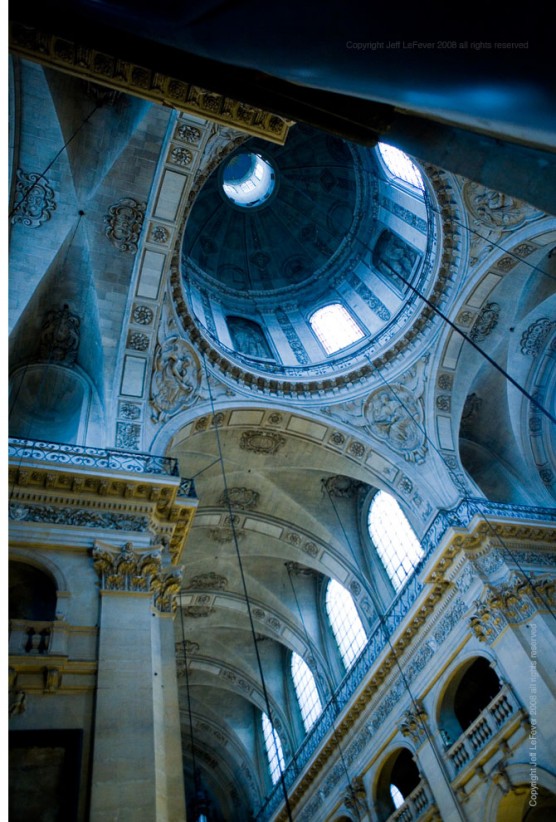
Consecrated
The word consecration means to make or declare sacred; set apart. The idea of a consecrated space was that it is set apart from the space around it—in the case of a church, it is Holy Ground where God is worshipped, if not even present as in the concept of “God’s House”. In the Holy of Holies of the Jewish Tabernacle and later the Temple, this was where God’s Shekinah Glory appeared to the High Priest.
At the time of the Gothic style, the cathedral was a declaration of mystery proclaiming the heavenly Jerusalem on earth and the promise of Hope to come. So beautiful in comparison to other structures that one was transcended in an atmosphere that declared Truth, Beauty and Goodness—the eternal qualities of God. These were and sometimes still are placed of quite refuge for reflection upon Divine Will. Reciprocals of prayer and petition. Inspirations, places of rest.
In 2003, I was awakened photographically to consecrated space during a month in France encountering her Gothics: churches and cathedrals. The Gothic style was born in France before spreading across Europe. My first encounter with a sacred space that forced my knees was Il Duomo in Milan, Italy, back in the 1980s. Since then I have been amazed by these structures as icon.
It was, however, that time in France; I decide to take it upon myself to photograph the disappearing legacy of our sacred artists and craftsmen—as it is likely, with the way religion is going and the arts as well, that we will never see the power of these structures again to the same extent and fervor. In a second trip to France, the countryside and Paris, two trips to Manhattan, San Francisco, and locally, I have looked for the numinous with consecrated spaces. It would be another project goal of mine to reflect and capture the elegant expressions of worship offered the Divine across Europe while we still have these testimonies.
For more information, go to www.lefever.com and www.jefflefever.com.