
Metanexus is an experiment in new ways of being human.
A nonprofit organization founded in 1997, it began, as many important things do, under one name while reaching for something larger. Founded at the turn of the twenty-first century, Metanexus Institute entered the world during a moment of quiet rupture. Science was transforming our understanding of the cosmos, life, and mind. Religion and philosophy were struggling to respond without either hardening into dogma or dissolving into abstraction. Culture still promised meaning, nations still promised futures, markets still promised abundance, and yet something essential was already slipping.
Metanexus emerged to explore that tension. At first, it spoke the language available at the time: science and religion, foundational questions, big history, “the whole story of the whole cosmos for the whole person“. These were not wrong. They were early moves in a much longer game.
What we were really circling, even then, was a deeper need:
how to live when the old ways of being human stop working.
From Questions to Practice
For years, Metanexus convened scholars, scientists, theologians, and thinkers to ask the largest questions we could articulate. We explored origins and futures, consciousness and cosmology, evolution and ethics. We built global conversations across disciplines that had learned to mistrust one another.
In retrospect, these weren’t just intellectual projects. They were rehearsals.
They were attempts to feel our way toward a more adequate posture toward life in a universe that is not finished, not closed, not governed by a single story. We were learning, slowly, that meaning does not arrive fully formed from above. It emerges through relationship, experimentation, care, and play.
Meaning, in other words, is not something we discover once and defend forever.
It is something we practice together.
After the Old Stories
Modernity gave us powerful tools and fragile myths. The neoliberal order that followed hollowed out shared life while promising endless choice. Postmodern critique exposed the violence and exclusions baked into these systems, but often left us suspended in fragmentation, irony, or exhaustion.
Metanexus lives in the space after these moves, without pretending we can simply skip them.
We no longer believe a single shared story will save us. Big History, Common Humanity, universal frameworks — these are too closed, too brittle, too confident. What we need now are not bigger stories, but better ways of being: ways of relating to many stories, many bodies, many cultures, many pasts and futures without hierarchy or erasure.
Infinite Games, Living Worlds
At its heart, Metanexus is committed to infinite play.
No story is final.
No identity is complete.
No culture gets the last word.
No wound is irrelevant.
No future is guaranteed.
This is not a refusal to act or commit. It is a commitment to keep the game going — to build worlds where creativity outpaces control, where care outlasts certainty, and where openness is treated as a strength rather than a weakness.
We understand humanity as a living system inside larger living systems. Evolution did not end with biology. Culture, technology, identity, and spirituality are all sites of ongoing emergence. To be human now is not to inherit a finished nature, but to participate responsibly in what we are becoming.
Where the Future Is Already Being Tried
Metanexus is a network for people experimenting with human flourishing in real time.
We pay close attention to the places where new forms of life are already being explored:
- complexity and open systems thinking
- evolutionary and process-oriented spirituality
- technology as a medium of culture, power, and selfhood
- design, art, and games as laboratories of meaning
- plural and emergent forms of identity and relationship
- communities — such as polyamory and LGBTQIA+ communities — where relationality, embodiment, and selfhood are being actively reimagined
These are not side conversations. They are among the front lines of human becoming.
Thinking Without Closure, Spirit Without Nostalgia
Metanexus stands in continuity with traditions that understand theology, philosophy, and spirituality not as systems that close the world, but as languages that keep it open. Thought, at its best, resists totalization. Spirit, at its core, exceeds containment.
In this strange metamodern interval — after the end of modern certainty and before whatever comes next — we believe it is once again possible to speak boldly, playfully, and lovingly about what matters. Not by returning to old absolutes, but by insisting that life itself is creative, relational, and unfinished.
Beyond the Connection
The name Metanexus means “beyond the connection.” It points to the generative space between cultures, between nations, between stories — the place where something new can actually happen.
Metanexus exists to cultivate that space.
This is an invitation to seekers, builders, technologists, artists, thinkers, and everyday people who sense that the future cannot wait, that suffering demands response, and that our birthright is more than survival.
We are here to play an infinite game together.
To steward an evolutionary spirit.
To become, collectively, a little more human than we were yesterday.
Welcome to the metanexus.
About the Executive Director
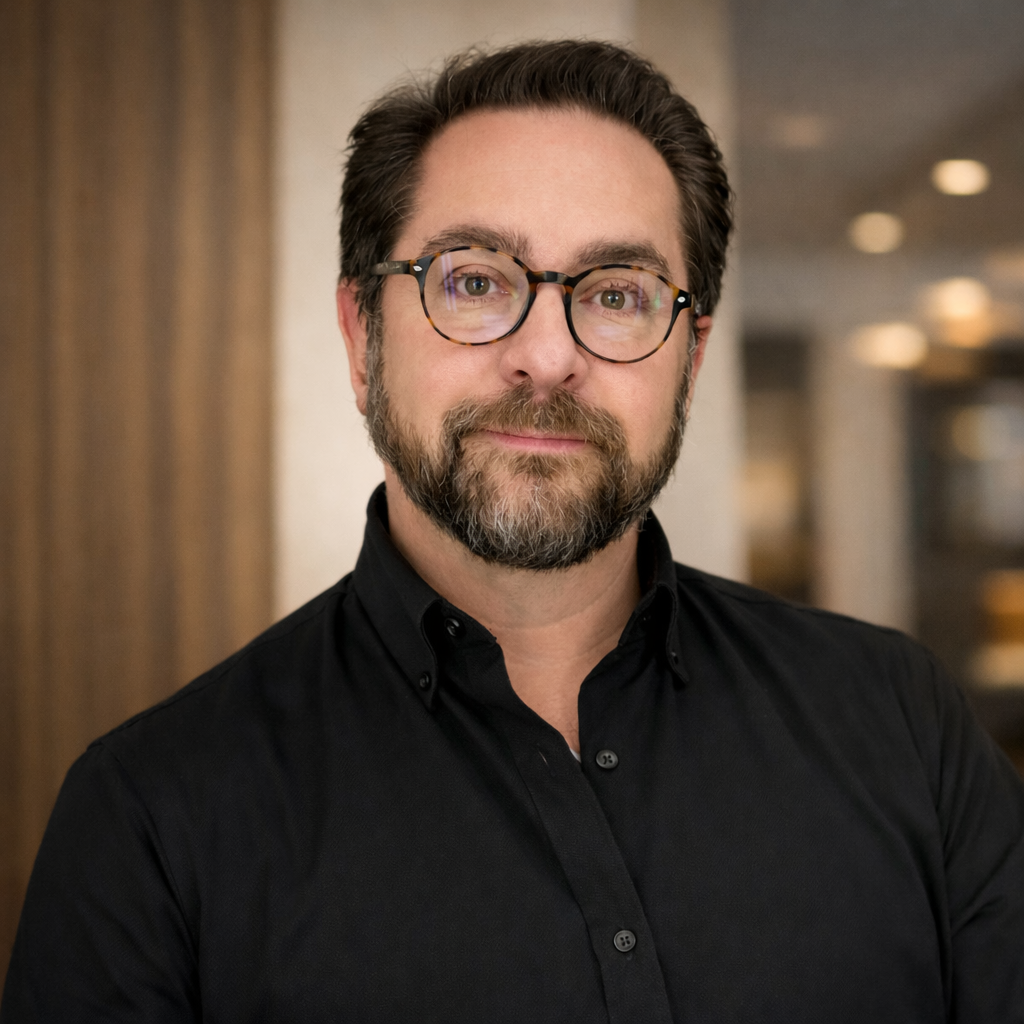
Gregory R. Hansell serves as Executive Director of the Metanexus Institute. A systems-minded executive shaped by complexity science, process philosophy, and evolutionary spirituality, he is interested in how institutions carry ideas across time, how cultures change, and how humans can cultivate wisdom in the midst of accelerating technological and civilizational transformation.
Gregory previously led the Center for Christogenesis as Executive Director, supporting organizational transformation, digital growth, and revenue stabilization. Earlier, he served at Metanexus as Managing Director of Global Communications and IT. He is co-editor (with William Grassie) of H+/–: Transhumanism and Its Critics (2011), an interdisciplinary collection on human enhancement and the contested meaning of “the human” in an age of emerging technologies.
At Metanexus, his work centers on reanimating the Institute’s role as a catalytic hub for rigorous, imaginative dialogue across science, religion, philosophy, and culture, with a special focus on evolutionary frameworks, emergent complexity, and the spiritual dimensions of human becoming. Gregory holds a BA in Religion and Interpretation Theory from Swarthmore College and an MA in Theology from Union Theological Seminary.