Toward a Transhumanist Theology
I want to argue that it is possible to look at transhumanism as a truly religious endeavor.

essay
I want to argue that it is possible to look at transhumanism as a truly religious endeavor.
Many evolutionists today subscribe to a version of scientific naturalism that claims to be able to explain all aspects of life, including suffering, in purely biological terms and without having to resort to theological understanding at all.
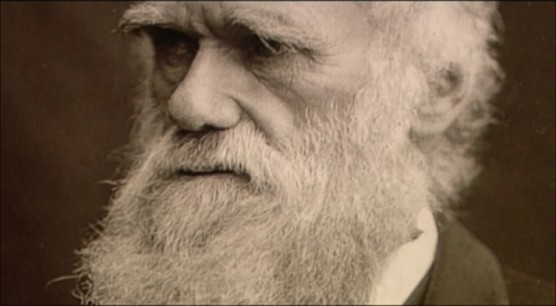
A review of Ecological Developmental Biology: Integrating Epigenetics, Medicine, and Evolution, By Scott F. Gilbert and David Epel (Sunderland, MA: Sinauer 2009). As a combatant in the evolution wars here in the United States and abroad, I have penned and processed quite a few papers on the interpretation of evolution.1 This means also reviewing the…
Insight and intuition abound in the realms of religion and the arts. They also abound in the twin realms of science and mathematics. While believers and artists may attribute them to the inspiring (in-breathing) of divinity or the wondrous workings of a daemon, scientists and mathematicians—though equally amazed and often thankful—are less wont to attribute…
His process metaphysics tends to depersonalize God to the extent of rendering theism irrelevant and naturalize moral evil in the service of evolution.
They fought the heresy. They hated the heresy. They defeated the heresy. Millennia later, in a cave, a stranger uncovers the writings of the Gnostics. It became clear why the early Christians so reviled Gnosticism: some Gnostics maintained that the God who created this world was evil and imperfect. Early Christians defended the goodness of…
Dawn Adrian is founder of the Tapestry Institute on science and native wisdom. The following is from her opening plenary address at the 2009 Metanexus conference, “Cosmos, Nature, Culture,” held in Phoenix, AZ. The vision of “Cosmos, Nature, and Culture” I share with you this evening is multidisciplinary, as suits the nature of this meeting…
Creating a best-case scenario for Sri Lanka.
We now have a loom on which to weave the many pieces of truth we discover. That loom is the history of our species over the last million plus years, the evolution of our planet over the last 4 billion years, and the evolution of the universe over some 13 billion years.
Without the history of nature, we cannot truly appreciate or understand the present and quite extraordinary moment in the natural history of our planet and the cultural evolution of our species.