An Artificial Natural History

Artist’s Statement

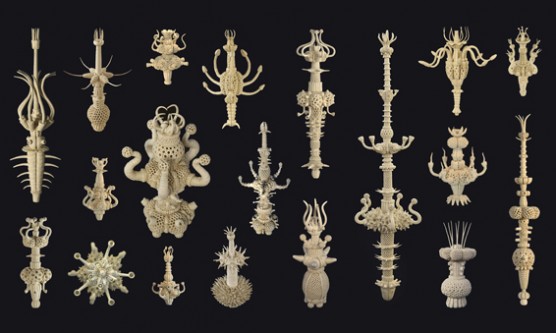
Extending the boundaries of the handmade to express abstract ideas, I confront the collision between art and science, directing energies into exploiting the properties of a primal material at the extremes of its capabilities. Abstracting biological concepts of form and function is a negotiation between the engineered and the organic from which aesthetic objects emerge as organizational devices or motifs for the disruption and reconciliation of sacred and secular notions.

Focusing on an intense process of making that is additive, never broken down or weakened by entropy, each structural increment represents an increase in the internal energy of the work to the point where order begins to radiate outward. The sculptures may seem at first glance self-contained, yet they are anything but; they are explicitly designed to be conduits to an unimaginably beautiful apocalypse referencing living forms in a dead material of organic origin.

The primary approach is an atomic accretion of simple units to build complex partially self-organized structures. As maker, my role is to set initial parameters that are subsequently altered during the working process. I think of clay as a fluid stone, which is transformed after firing into a fossil of its plastic self. Symmetry plays an important part as an underlying organizing principle. I work with the tension between durability and fragility working at the extremes of what is possible and practical while using video, sound, and light to extend the spectrum of engagement with the forms. My intention in introducing such a high degree of surface texture, structure, and intricacy is to draw in the observer to engage in imaginative examination.

The sculptures already have their history as objects of wonder, fascination, and contemplation suggesting, among other things, fantastic artificial fossils, ivory carvings, and ritualistic objects. They are an explicit invitation to speculate on intent and purpose beyond the sculptures themselves.
Author

  • Alexis Rago is an artist based in England whose work exploring the connections between art and science has been shown in Europe and the United States. He studied biology at Manchester University and fine art at the Institute for Art and Restoration in Florence, and his biological interests, including taxonomy and paleontology, are a primary source of inspiration. His current work in clay is described as “part of an ongoing synthesis of influences mediated through the return to a primal material.” A traveling exhibition of his recent work, “An Artificial Natural History,” was showcased at the Museums Association Annual Conference in Manchester, and “Idolatrous Me” was a multimedia project recently undertaken as an artist in residence at Nottingham Trent University. His work has also been hosted by the Linnean Society of London, where he is a fellow. 

Similar Posts

  • Crystalline World

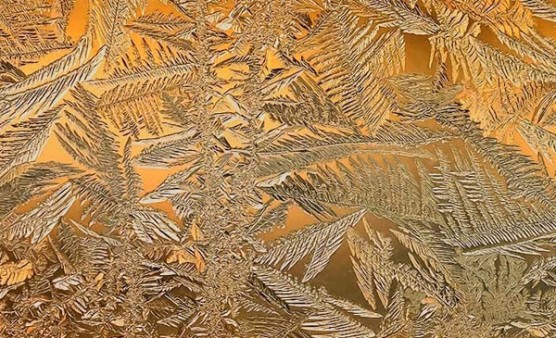
    Russian photographer Andrew Osokin captures the fragile beauty of snowflakes and ice crystals in the brief moments before they melt away. Using macro lenses, he reveals the exquisite world of not only these minute complex forms but also those of water droplets and insects in all their glory. To view more of his beautiful images,…

  • Found in Nature

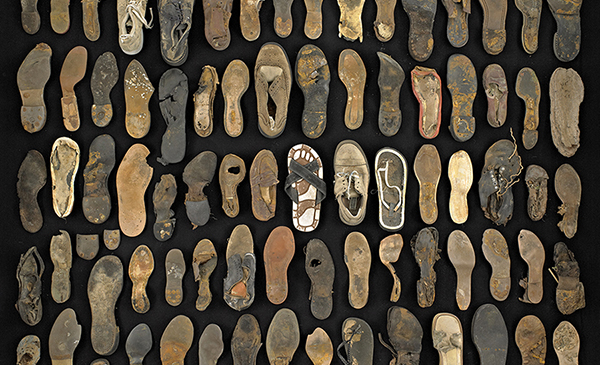
    An Interview with Barry Rosenthal What was the genesis of this project? Was it a reaction to the amount of waste that we humans generate and discard? For several years prior to starting the ‘Found in Nature’ series, I was shooting botanical photographs out in the field, that I call “PhotoBotanicus” and found myself at…

  • of time, lost

    of time, lost let me tell you something about desire… I long for dark rooms. Crumbling architecture, peeling wallpaper, floors Polished by years of use. Dim light. Mirrors darkened with time, suspended in silence. I long for empty rooms. The residue of emotion contained within. Remnants. Traces of passage, Forgotten, like wilted bouquets. I long for…

  • LUNGTA

    The imagery is drawn from that sublime altar of the earth that is the Himalaya—the Abode of the Gods. It was to these remote mountains, specifically the region of Lo, that esteemed Philadelphia composer Andrea Clearfield and I traveled in 2008 for the purposes of an artistic collaborative.

  • Epiphany

    I was with my mother when she died a quarter of a century ago. As the terrible moment approached, she described something that struck me deeply. My brothers and sisters had livened her hospital room, given it bright colors, with various decorations, and my mother was gazing at them. She said the balloons were talking to her, and the…