Beyond Intelligent Design: The Sciences
ByEditor
A panel discussion with Stephen Barr, Colin Purrington, and Jeff Schloss, moderated by Peter Dodson, at the 2006 Metanexus symposium “Beyond Intelligent Design.”

A panel discussion with Stephen Barr, Colin Purrington, and Jeff Schloss, moderated by Peter Dodson, at the 2006 Metanexus symposium “Beyond Intelligent Design.”
Metanexus: Views 2002.01.03 2679 words If we are the products of evolution, can we take positive initiatives, makethe right choices? Or are our choices fixed since days of old, and isfreedom nothing but an illusion? Libraries could be filled with books on’free will’. Here I want to indicate briefly why I hold that a meaningfulnotion…
In this lecture, William Grassie proposes that we focus science education more on what happened when than on how and why evolution occurs.
I begin this review with two snapshot reactions. First, there was the review of Consilience in Science: this appeared early in 1998, and was written by a well-known philosopher of science who had himself written on some issues similar to those touched on by Wilson. To say that the review was negative would give negativity…
1. Introduction Intelligent Design is a successor to creationism, but more subtle and more acceptable of the evolution theory. It arose from biochemist Michael Behe’s book Darwin’s Black Box,1 and was seconded, mainly on statistical grounds, by William Dembski.2 They claim that certain complex systems, like the immune system, bloodclotting, visual mechanism and bacterial…
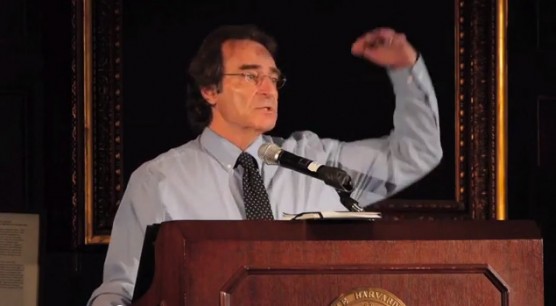
This keynote talk by Bob Bain was given at the Metanexus symposium on Teaching Big History at the Harvard Club of New York on September 21, 2013. Bob Bain shares the experiences of the teachers and students participating in the Big History Project and argues that the curriculum is the key to solving a number…
Backed by stunning illustrations, David Christian narrates a complete history of the universe, from the Big Bang to the Internet, in a riveting 18 minutes.