State of the World’s Science
The pursuit of knowledge is now a global enterprise. Scientific American and Nature have teamed up on this special report on how this trend is changing the way science is done, and how it informs the world.

The pursuit of knowledge is now a global enterprise. Scientific American and Nature have teamed up on this special report on how this trend is changing the way science is done, and how it informs the world.
It was a slender bird, with long wings and a spear-like bill to catch swift ocean prey. And scientists say the first glimpse of the extinct giant penguin species was worth the 26 million-year wait. Experts from New Zealand and the United States reconstructed a fossil skeleton of one of the giant sea birds to…
A team of astronomers using the Atacama Large Millimeter/submillimeter Array (ALMA) has spotted sugar molecules in the gas surrounding a young Sun-like star. This is the first time sugar been found in space around such a star, and the discovery shows that the building blocks of life are in the right place, at the right…
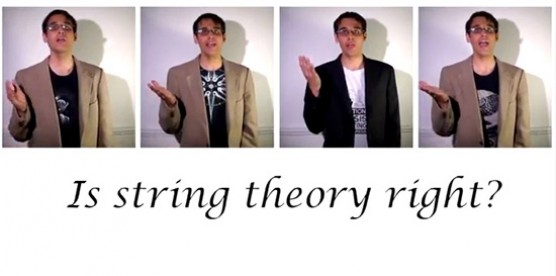
Delighted to share this video of String Theory set to Bohemian Rapsody by A Capella Science. This video and two others are the work of Timothy Blaise, a graduate student in theorectical physics at McGill University. Enjoy!
Big History is an example of a new systems level in the complexification of intellectual history, in which new insights can emerge out of the attachment of separate visions.
While we have a supremely accurate theory of what happened after our universe started in its super-hot, super-dense childhood, we are still in the dark about its birth. But after more than a half century of work scientists are, perhaps, finally ready to go before and beyond the big bang. Author Metanexus Editors
Extinctions during the early Triassic period left Earth a virtual wasteland, largely because life literally couldn’t take the heat, a new study suggests. Between 247 to 252 million years ago, Earth was reeling from a mass extinction called the end-Permian event. The die-off had wiped out most life on Earth, including most land plants. The…