The New Sciences of Religion
An original and compelling scientific interpretation of religion and science that will challenge and delight students and scholars alike.

Scientists seek explanations for religion in a stunning array of new studies. In addition to psychology, sociology, and anthropology of religion, new disciplines are brought to bear, including economic, evolutionary, and cognitive neuroscientific models of religious and spiritual phenomena.

An original and compelling scientific interpretation of religion and science that will challenge and delight students and scholars alike.
What does it mean to take a scientific approach to the study of religion? Does a scientific study of religion disprove the existence of God, the reality of Nirvana, the possibilities of miracles, and the hopes of a life beyond death?

There is more functional diversity within a great tradition than between great traditions.
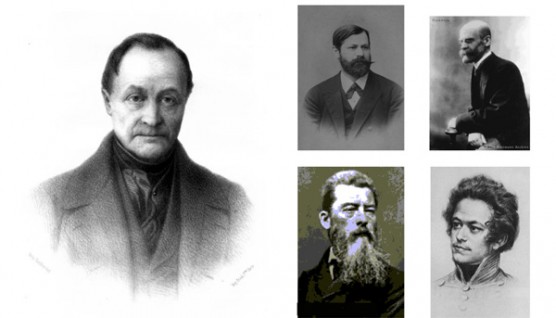
Early social theorists on religion all used some version of Marx’s base-superstructure model of causation, though they may not have used the exact terms. Some natural or material factor that determines the beliefs and behaviors of individuals.
An excerpt from Chapter 3 of The New Sciences of Religion: Exploring Spirituality from the Outside In and Bottom Up (Palgrave Macmillan, 2010) Pages 65 – 67. Our second major question in this chapter is how to apply economic models to understanding religion itself. One of the first to advance such a theory was Karl…

An excerpt from Chapter 4 of The New Sciences of Religion: Exploring Spirituality from the Outside In and Bottom Up (Palgrave Macmillan, 2010) Pages 89 – 91. Another evolutionary approach to explaining religion revives group-selection theory or, more properly, multilevel-selection theory. Selection works not just at the level of individual genes but also on networks…
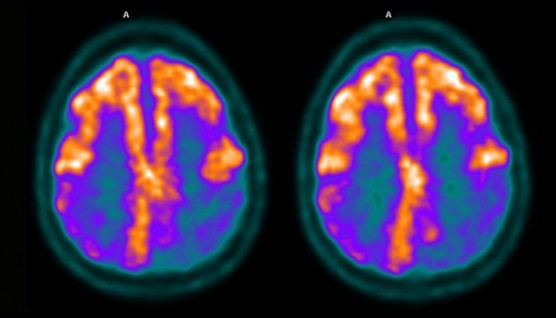
A fuller taxonomy of religious experience needs to be developed, detailed, and correlated with different brain states and cognitive theories of religion.

Recent observational studies indicate a significant, mostly positive connection between religiosity and better health, though it would be difficult to isolate what aspect of religion and spirituality plays the significant role.

The most important stories that humans tell, retell, and reframe are the ones people do not generally recognize as stories at all. These are referred to as “metanarratives.” These master stories are the stuff of ideologies, religions, nationalisms, and cultures.

Today, an informed philosophy of science would also need to talk about information as a metaphysical concept.