Humans Plus or Minus: An Introduction
Is transhumanism the great promise of technoscience or “the world’s most dangerous idea”? The debate is an extremely fruitful field for philosophical and theological inquiry.

Previously imaginable only in the realm of science fiction, the reality of transhumanism may soon be upon us. Here, we bring together the foremost advocates and critics of transhumanism to debate the promises and perils of bioengineering an improved humanity.
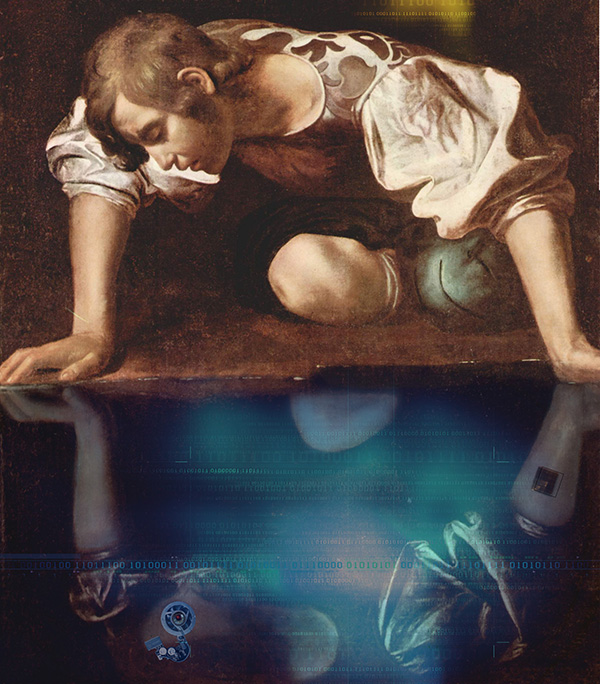
Is transhumanism the great promise of technoscience or “the world’s most dangerous idea”? The debate is an extremely fruitful field for philosophical and theological inquiry.

Imagine billions of nanobots, tiny computerized machines smaller than your red blood cells, travelling through your body, inserted in your brain, all communicating internally with each other and externally with machines outside of your body. These nanobots could repair damaged cells in your body, destroy cancer cells, eliminate pathogens, provide optimum nutrition, eliminate unhealthy chemicals,…
The transhumanist community is one that is fervently involved in trying to figure out where technogenesis is headed in the contemporary era and what it implies about our human future.
Cybernetics calls to mind a series of familiar images that turn out on closer inspection to be highly doubtful.
Cybernetic immortality is the idea that we can achieve a sort of immortality by downloading (or uploading) our consciousness into a computer.
Transhumanists assume that progress is inherent in nature and culture. The direction is set; the task of transhumanist technology is to increase the speed forward.
The issues of the human, the posthuman and the transhuman revolve around distinctive narratives, and these are often highly slippery.
Ted Peters and others have reminded us of some trite truths about technology, and that the reminder may serve as a reality check for transhumanists
The central issue now is the actuality of altering the human form is practicable, duplicating the mind is probable, and extending life is feasible.
The prospect of posthumanity is feared for at least two reasons. One is that the state of being posthuman might in itself be degrading. Another is that posthumans might pose a threat to “ordinary” humans.