Antarctica
ARTIST STATEMENT
As long as I can remember, I have been in awe of our natural world. The extraordinary complexity of the universe, our planetary system and our habitable natural environment is the vantage point from which I begin making my work. By adopting a somewhat scientific methodology, my photographic and artistic inquiries have led me to follow a non-traditional studio practice and career. My “studio” is almost always outdoors, often under the starry sky, and increasingly in collaboration with scientists and research institutions. My work has led me to investigate the physics of atmospheric and astronomic phenomena as well as the simple beauties and complex afflictions of our environment and ecologies.
Viewed over time, my artistic process has woven these diverse interests into distinct patterns. For an early series of botanical studies, I used a photographic process I developed, the Lunatype, which transformed glass plate negatives into mirror positives. Concurrently, I documented the environment in traditional black-and-white photographs, looking at rhythms between nature’s architecture and light. Breaking from conventional photography, I began a series of reductive works, called Light Recordings. In this continuing series, light is both my medium and subject, and I use self-built cameras to directly record the incremental changes of solar and lunar light over time. This led to an interest in Living Light and two artist-in-residences at the Scripps Institution of Oceanography to document bioluminescence, the single-celled organisms that glow in our oceans.
An artist-in-residence at the McDonald Observatory allowed me to produce my first video piece documenting the waxing and waning of lunar light through an altered telescope. Under those clear, dark skies, I reflected on how far from nature humans have strayed . . . so few people today experience the wonders of remote landscapes. In the poignancy of this realization, I initiated The Polar Project, the mission of which is to capture the natural environment of the polar regions, preserve their image for future generations and inspire awareness of the peril they face with increased climate disruption. (See below for more about The Polar Project.)
My growing concern for the injustices against our environment has led me to photojournalism through which I document the ecological and human impact caused by anthropogenic environmental negligence and climate disruption. Currently, as all these interests weave more closely, I am making artworks about the aftermath of the recent wildfires in the U.S. Southwest, photographing and collecting the charred remains of trees, grasses, pinecones and needles, dirt and animal bones. The resulting series of Wildfire Paintings, photographs and installations are both eulogy to the incinerated flora and fauna as well as forensic evidence of the impact of climate disruption. – Erika Blumenfeld
THE POLAR PROJECT
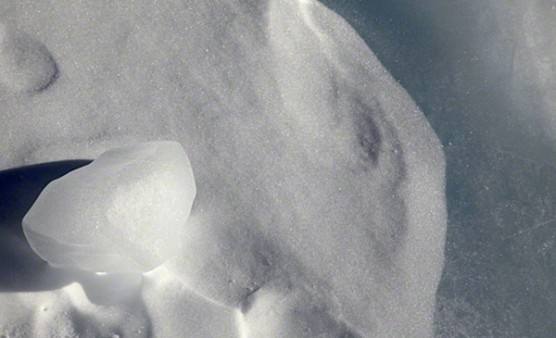
In 2008, Blumenfeld was a recipient of a Guggenheim Fellowship for this project conceived at the McDonald Observatory. In January 2009, during her fellowship year, she was invited to join a six-week expedition to Antarctica as the artist-in-residence and official team member of ITASC (Interpolar Transnational Art Science Constellation) and the ICEPAC experiment, and the guest of the South African National Antarctic Program. Writes Blumenfeld:
“The point at which the wonder of natural phenomena begins to awaken the mind and imagination is the point at which art, science and humanity meet, and The Polar Project’s vision is to harmonize these perspectives. I believe that the Arctic and Antarctica are a part of our cultural and world heritage, and The Polar Project’s mission is to capture the natural environment of these precious regions to preserve their image and voice for future generations and to inspire awareness and change now.”
For more about the project and to see more photographs, please go to
www.erikablumenfeld.com/the_polar_project/