Warning Label: Big Pharma meets Big History
Why should Big Pharma invest in Big History? My answer is in the form of a warning label I imagined attached to all pharmaceutical products.

essay

Why should Big Pharma invest in Big History? My answer is in the form of a warning label I imagined attached to all pharmaceutical products.
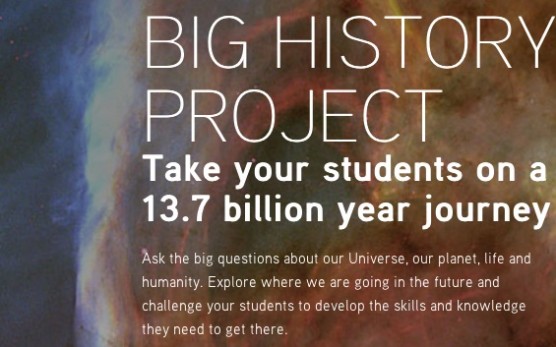
There are big things happening with the Big History Project, an educational initiative started by Bill Gates to create a free online course for high school students.
Jason Silva’s latest explores the Omega Point, a term coined by Pierre Teilhard de Chardin to describe the maximum level of complexity and consciousness towards which the universe was evolving.
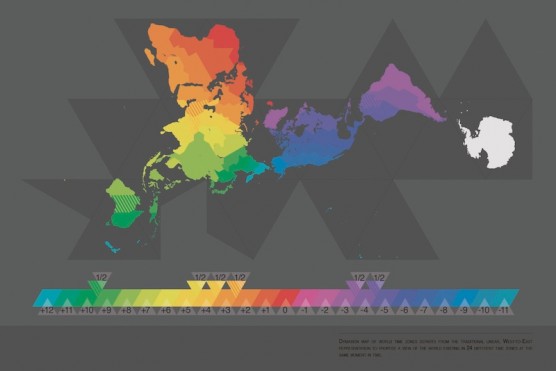
Seventy years after its invention, the Buckminster Fuller Institute has organized a competition challenging graphic designers, visual artists, and citizen cartographers to create a new and inspiring interpretation of the Dymaxion Map.

Join Metanexus in exploring the benefits of teaching Big History and the challenges of its implementation. We will share our vision for popularizing this emerging global perspective and invite you to join us in the conversation.

EnvironmentalScienceDegree.com is an enormously helpful platform for anything and everything environmental. Their mission is to help environmentally conscious professionals and those seeking an education in the field to move forward. Recently, they have compiled a list of 101 Web Resources on Climate Change. As an incredibly complex and controversial topic, it is difficult to find…
Comedian Charlie Varon “saves” his audience from worldly despair. Fourteen minutes of entertainment and scientific education culminates in a profound identity shift: we know that we hail from a long and persistent ancestry. And we owe it to the past to secure a viable future.

Cosmic Voyage is a 1996 short documentary film that explores the scale of the universe from the quantum level to the cosmos.

Science is getting in on the crowdfunding trend in a big way. Over the past few years, organizations like Kickstarter and Indiegogo have revolutionized the fundraising process for small businesses and entrepreneurs by bypassing traditional funders.

On a recent visit to Pioneer Works in the Brooklyn Red Hook neighborhood, I heard a lecture by Matthew Putman on “Imaging the Invisible”. The venue is a newly renovated factory and warehouse dating back to 1866. Putman began his lecture in the post-and-beam grand hall at Pioneer Works by referencing Richard Feynman’s 1959 lecture. “There is plenty of room at the bottom.”